
Explore
Where it All Goes
Everything goes somewhere. Socks don't actually disappear in the laundry and solid waste doesn't disappear after leaving your sidewalk or recycling bin. Knowing where all of the waste that we create goes is one step toward environmentally responsible citizenship. Subsequently altering our behavior is the more important step, but let's start with the knowledge bit.
Recyclables
Each year in Massachusetts, over 6 million tons of residential and commercial solid waste is collected for re-processing into new products. The collection, sorting, baling and reprocessing of these materials employs 14,000 workers and generates around $3.2 billion in revenue. No doubt about it, conservation creates jobs.
| Waste generation and recycling in Massachusetts |
|---|
|
12.6 million tons of solid waste was generated by residential, commercial and construction/demolition sources in 2008. This is enough to fill Fenway Park 74 times. 44% of this solid waste is currently recycled, recovered or composted. An estimated 60% to 70% of the solid waste stream is potentially recyclable. Paper and paperboard accounts for 32% of the municipal waste stream. (by weight) Yard Waste and trimmings make up 13% of the municipal waste stream. (by weight) Food scraps represent 12% and plastics represent 11% of municipal solid waste. (by weight) |
From the Massachusetts Department of Environmental Protection's 2010-2020 Solid Waste Master Plan www.mass.gov/dep/recycle/
| Direct economic benefits of recycling/reuse in Massachusetts |
|---|
|
14,000 jobs $3.2 billion in revenue 2000 recycling businesses and organizations 3% of the total workforce is employed in recycling and related fields (this is equal to the percentage of the workforce employed in the child care field, the electric utility industry or the accounting and bookkeeping professions) |
From the Massachusetts Department of Environmental Protection's 2010-2020 Solid Waste Master Plan www.mass.gov/dep/recycle/
Many materials in the solid waste stream are technically recyclable, but the most common materials recovered for recycling are those that are economically recyclable. This means:
- There are sufficient, un-contaminated quantities of the material available in the waste stream.
- It is relatively easy to separate these materials from the waste stream.
- There is a local, processing center for the material (like a recycling center).
- The recycling center has a reliable buyer (an end user such as a factory or manufacturing plant) for the material,
- The end user has a steady market for their recycled products.
The most common, economically recyclable materials are discussed below.
Paper
Paper is matted fiber from trees that is processed in a variety of ways to produce goods such as newspaper, cardboard, tissue and office paper. In the United States, about 35% of the felled trees in logging operations go to the production of paper products.
Recycling those paper products extends the lifespan of plant fiber in the marketplace, saves energy and reduces the need for logging.
| Recycling one ton of paper saves approximately: | |
|---|---|
|
|
What happens to the paper Earthworm collects?
Material that Earthworm collects is delivered to the Charlestown facility which handles about 500 tons of recyclables per day. At the Charlestown plant the paper goes through a sorting line and into a baler that compacts it into large rectangular "hay bale" shaped cubes that are bound up with wire. These large bales are loaded by fork trucks onto tractor trailer trucks and delivered to re-pulping facilities. From the re-pulping plant the paper is sent on to re-manufacturing plants where it is made into new products such as toilet paper and boxboard (cereal boxes, shoe boxes).
To learn more about the trail of paper from the time it leaves the consumer to when it is made into new products, please check out the videos below:
Lifecycle of Recycled Paper (parts 1-4)
Plastic
|
Plastic is a general term used to describe a wide variety of resins and polymers that have different characteristics and uses. There are two main types of plastic resins/polymers: Thermoplastic and Thermoset. Thermoplastic polymers can be heated and formed, then heated and formed again and again. The shape of the polymer molecules allow it to flow under pressure when heated above their melting point. For this reason, these types of plastics are more easily remade into new products. Thermoset polymers undergo a chemical change when they are heated. After they are heated and formed, these molecules cannot be re-heated and re-formed. This impedes the recycling of this type of plastic. |
Discarded plastic products and packaging make up a growing portion of Municipal Solid Waste (MSW); the Environmental Protection Agency (EPA) estimates that plastic waste accounts for about one-fifth of all waste in the waste stream. Currently, Americans consume over 29 billion plastic water bottles annually, and 8 out of ten of them end up in a landfill or incinerator.
Over the past two decades, however, the recycling of plastics has dramatically increased. In the past 10 years alone, the number of plastic recycling businesses in the United States has tripled.
To facilitate the recycling of commonplace, consumer plastics, a numerical coding symbol was developed in the 1980's by the Society of the Plastics Industry. This coding system helps recyclers to identify and sort plastics and it is stamped directly onto the product. Plastic consumer goods not identified by code numbers, such as plastic tarps, toys and buckets, are not usually collected for recycling. There is, however, limited recycling of some of these un-numbered plastic products when they exist in truckload quantities and are from industrial sources.
The plastic that Earthworm collects in its Bottle & Can program is first processed in Charlestown, MA were it is prepared for shipment to plastic mills. This preparation begins with the mechanical sorting of the plastic containers by their numerical recycling code. Once separated, individual plastic types such as PET or HDPE are compacted into bale-like cubes for economical shipment to end users. Sometimes, plastic is shredded and shipped to reuse mills as flakes.
Recycled PET has many uses and there is a well established market for this resin. By far, the largest usage is in textiles. Carpet companies can often use 100% recycled resin to manufacture polyester carpets in a variety of colors and textures. PET can be spun like cotton candy to make fiber filling for pillows, quilts and jackets and can also be rolled into clear sheets or ribbon for VCR and audio cassettes. In addition, a substantial quantity goes back into the bottle market.
| What is plastic recycled into | |
|---|---|
| MATERIAL | NEW PRODUCT |
| #1 PET (soda and water bottles) | Carpeting, fleece, filler for sleeping bags, jackets and pillows, luggage, bottles |
| #2 HDPE (milk jugs, detergent bottles) | Plastic lumber, laundry detergent bottles, flower pots, trash cans, dog houses and picnic tables |
| #3 PVC (clear, plastic food containers) | Loose leaf binders, mud flaps, packaging, traffic cones, garden hoses |
| #4 LDPE (plastic bags, squeezable bottles) | Shipping envelopes, trash can liners, floor tile, paneling |
| #5 PP (yogurt and margarine containers) | Brooms and brushes, ice scrapers, battery cables, oil funnels, bicycle racks, rakes |
| #6 PS (plastic utensils, cup, plates, cd cases) | Rulers, license plate frames, foam packaging, light switch plates |
| #7 Other (re-usable water bottles) | Bottles, plastic lumber applications |
The actual recycling process for plastics varies. HDPE (milk jugs and detergent bottles), for example, is reformed through a simple process. The bales of plastic are broken apart and then ground into small flakes. These flakes are then washed and floated in water to separate them from any heavier, sinkable contaminants. The cleaned flakes are then dried in a stream of hot air and can be boxed and sold in that form. More sophisticated plastic factories may reheat these flakes, add pigment to change the color and run the material through a pelletizer. This process creates little beads of plastic that can then be reused in injection molding presses to create new products. Some end uses for recycled HDPE are plastic lumber, pipes, recycling containers, flower pots, and trash cans.
For more information about plastics recycling visit the Society of Plastics Industry's website at www.plasticsindustry.org
Metal
The most commonly recovered metals in the non-industrial waste stream are steel and aluminum. Approximately 80% of steel scrap in the US is recycled, making it the most recycled material (more than paper, glass and plastic combined). This is no surprise since making new steel from old steel requires 75% less energy than making steel cans from mineral ores. Aluminum also has a very high recovery rate (approximately 50%) for similar reasons.
The steel and aluminum that Earthworm collects are mostly in the form of food and beverage cans. It is estimated that Americans use and dispose of over 100 million steel cans each day. Each of these cans, however, contain at least 25% recycled steel. The recycling of these food and beverage cans has a far reaching beneficial impact since it is estimated that 40% of all toxins released by industry is from hard rock mining operations.
Due to aluminum's high scrap value, its durability, its significant energy savings, and bottle bill legislation, it is estimated that 2 out of every 3 of aluminum cans in the US are recovered for recycling. In fact, two thirds of all the aluminum ever produced is still in use today. Of all of the aluminum currently in the US marketplace, 50% is derived from ore, 30% is from recycled aluminum, and 20% is imported.
Steel and aluminum cans that Earthworm collects are separated mechanically, crushed, baled, and shipped to re-manufacturing mills. These materials are used to make new cans and it is estimated that scrap aluminum can be back on the grocery shelf as a new container in as little as 60 days from the day it was set aside for recycling. At present, the aluminum cans we collect are remade into new Budweiser beer cans.
| Summary of the aluminum recycling process |
|---|
|
Aluminum cans are delivered loose to a recycling center. The cans are compacted and baled. The compacted bales or briquettes of aluminum are shipped to aluminum smelting mills (approximately 50 sites in the US). The aluminum is shredded and crushed into pieces the size of wood chips. The chips are pushed into a melting furnace which combines the recycled aluminum with non-recycled aluminum. The molten aluminum is poured into ingots. The ingots are rolled into thin sheets (one hundredth of an inch thick) in a rolling mill. Once cooled, the sheets are removed, coiled and shipped to can manufacturers. Recycled aluminum can be back on the grocery shelf in as little as 60 days. |
For more information on steel can recycling, visit the Steel Can Recycling Institute's website at www.recycle-steel.org
For more information on aluminum recycling, visit www.aluminum.orgGlass
Glass is made mostly from sand (silica) much of which is mined in coastal zone states like New Jersey. Other mined minerals such as soda ash and limestone are also part of the centuries old recipe for making glass.
Although glass products have lost significant market share to plastics over the years, they still represent a sizable portion of the waste stream. Bars and restaurants are a significant source of the scrap glass in our landfills.
Fortunately, glass - when separated by color, is an easily recyclable material that can be recycled into new glass containers an unlimited amount of times.
According to the EPA, 34.5% of glass beer and soft drink bottles and 28.1%of all glass containers were recycled in 2008. This represents a significant savings in energy when compared to making glass from mined minerals.
The glass that Earthworm collects from businesses in the Boston area is brought to a single stream recycling plant in Charlestown, Massachusetts.
| What is single stream? |
|---|
|
Single stream recycling is fast becoming the norm and replacing source separated programs. In a single stream program, all materials - glass, plastic, paper, and metal, are collected into one container which is emptied into a truck, then dumped out at the sorting/baling plant. The heap is then separated largely by machines. |
| Why is single stream a problem for glass recycling? |
|---|
|
The single stream process is proving to be a growing challenge for glass recycling in particular. While it is easier for the consumer to put the items into one bin, it increases greatly the problem of contamination of the scrap materials. This renders some portion of the items less marketable - and for a significant amount of glass, completely unusable for recycling. Because it is almost impossible to not break or pulverize glass during the mass collection and sorting process, it is estimated that "on average, 40% of glass from single-stream collection winds up in landfills, while 20% is small broken glass ("glass fines" used for low-end application.") - from Understanding Economic and Environmental Impacts of Single-stream Collection Systems, Container Recycling Institute, 2009. |
In order for glass to be recycled into a new glass container, it is necessary to separate the glass by color. Brown glass, for example, cannot be used to make green glass and vice versa. Single stream processes make that very difficult as once the glass is broken and mixed with paper metal and plastic it is not possible to recover it for recycling. There are uses (described below) for the non-sorted, pulverized glass, but the sure fire way to keep glass in the circular system of recycling is to take it back to a redemption center when possible. Non-deposit glass is more challenging as most towns no longer offer a drop-off sorting option as was once the norm.
Recovered glass coming from plants such as the Charlestown facility is sent to a Recovered Glass Processing plant or a Benefication Plant. These operations use a variety of processes such as crushing, screening, metal separation and vacuum extraction to remove contaminants like paper, plastic and metal. The cleaned, crushed glass produced by these processing plants (there are about 75 of them in the US) is referred to as cullet. There are seven mills nationwide that then turn this cullet into new glass packaging.
When separated by color and free of contaminants, the majority of scrap glass in the US is used to make new jars and bottles. It is estimated that a typical glass container is now made up of as much as 70 % recycled glass. Moreover, an estimated 80%of recovered glass containers are made into new glass bottles which can go from a recycling bin to a store shelf in as little as 30 days.
For more information on Glass recycling, visit the website of the Glass Packaging Institute www.gpi.org.
Electronics
Overview
|
"most of the environmental harms ever caused by a product occurred in mining, refining, and manufacturing that product - before it was ever used or ever placed on a retail shelf. Most of the energy and toxics it will ever produce have already been released." |
Electronic waste contains hazardous as well as valuable and scarce materials. There are upwards of 60 elements that can be found in home and office electronics. (Greenpeace Report, Toxic Tech: Not in our Backyard) According to the US Department of the Interior Fact Sheet on e-waste, one metric ton of electronic scrap from personal computers (PC's) contains more gold than that recovered from 17 tons of gold ore.
It is estimated that the volume of e-waste or e-scrap is growing at a rate three times greater than that of other non-plastic wastes. This is due to the quick obsolescence of electronic products like computers, and phones. In the US alone, we generate over 1.5 billion pounds of e-waste annually and most of it ends up in landfills or incinerators where the device's heavy metals (such as lead, mercury, cadmium, and beryllium) pose an environmental and health risk. In the United States, an estimated 70% of heavy metals in landfills come from discarded electronics. (Earth911.org)
As a result, many states have adopted, or are in the process of adopting, legislation that attempts to steer e-waste toward recycling. Massachusetts for example, banned CRTs - cathode ray tube containing items such as monitors and television sets, from its municipal waste stream as of April 1, 2000. In many instances, these legislative efforts feature placing the responsibility for product recycling and disposal at the doorstep of the manufacturer. Meanwhile, some product manufacturers are beginning to embrace the idea of product stewardship, wherein the entire life cycle of the product is considered during the design phase of their products.
Currently, the overall rate of recycling for e-waste in the US is put at around 15 to 20 percent (EPA). This means that a whole lot of e-scrap is still being wasted each year. But the recycling of electronics has also come under scrutiny with revelations that some handlers are less than careful with the materials they trade or handle. The WR3A trade network, The Basel Action Network's E-Steward Certification program and the EPA's R-2 Certification are each an attempt to create guidelines for e-waste handling that would prevent the environmental damage caused by unscrupulous or less careful recyclers.
What We Do
Each year we process over 100 tons of e-waste. All of the used electronics that Earthworm collects are first brought back to our warehouse in Somerville where we evaluate, sort, and separate loads (click here for a full discussion of all our Handling Practices).
Reuse
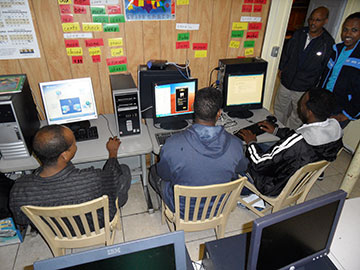
In conjunction with Tecschange, Earthworm donated computers to the Eritrean Community Center
As an environmental organization, we value reuse above recycling in terms of environmental benefit, so we set aside items that we think are potentially reusable. Usually this includes newer model working monitors, laptops, printers, computers, routing equipment, phone systems, etc. This equipment is either donated to small, nonprofit organizations or sold to reputable, local parts dealers.
| Earthworm's Position on the Export of E-Scrap |
|---|
|
Some factions of the reuse/recycling community recommend instituting a ban on all e-scrap exports from developed to developing countries. And while there have been occurrences of mishandled e-scrap causing serious environmental and health hazards in other countries, there are also legitimate handlers of used electronics in the developing world. Efforts to ban e-scrap trade to all overseas destinations rely on evidence from, say Nigeria, to penalize scrap dealers in Ghana, Mexico or Malaysia. This type of stereotyping is often well-intentioned, but it is misinformed. The material wealth of the United States is such that our castoff computers are still highly valuable in other countries for education, healthcare improvement and internet access which opens doors to political freedoms. Earthworm supports legitimate, monitored e-scrap trade with known overseas brokers. This trade is not only an environmentally sound practice (reuse is significantly more beneficial than recycling) it is also socially responsible economic policy. To take a virtual trip to some of the people around the globe who benefit from reused electronics, check out this video produced by folks at MIT: |
Recycling
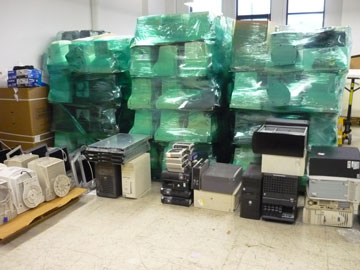
Used electronics at our warehouse
The electronics that we designate for recycling are organized by like item and prepared for shipment. For example, we stack like-sized monitors on pallets and we fill gaylords (giant cardboard boxes) separately with keyboards, printers/copiers/faxes or other miscellaneous metals. The majority of the materials flagged for recycling are shipped by truck to Vermont where they are either repaired, salvaged for parts, or recycled for materials (i.e. metal or plastic). This facility is an R2 certified de-manufacturer of electronic wastes and is also a member of the WRSA network of environmentally conscious electronic recyclers. Click here for an overview of R2 certification. Other materials such as cables, batteries, server racks, air conditioners and refrigerators are delivered to a scrap metal dealer in our neighborhood.
| At-a-Glance Chart of What Earthworm Does with the E-Scrap We Collect | |
|---|---|
| ITEM | DESTINATION/USE |
| Laptops | Sold on Ebay Local technology re-sellers |
| Working CRTs (monitors/TVs) |
Donated to local nonprofits Local technology re-sellers E-Waste demanufacturer in VT that works with:
|
| Non-Working CRTs | E-Waste demanufacturer in VT that works with:
|
| Computers | Donated to local nonprofits Local technology re-sellers E-Waste demanufacturer in VT that works with:
|
| Working Flat Screens | Donated to local nonprofits Local technology re-sellers E-Waste demanufacturer in VT that works with:
|
| Non-Working Flat Screens | E-Waste demanufacturer in VT that works with:
|
| Cables/wires/batteries | Scrap metal dealer in Somerville that works with:
|
| Possible End Uses for the Scrap Materials Reclaimed from E-Waste | ||
|---|---|---|
| ITEM | MATERIALS SALVAGED | SOME POSSIBLE END USES/BENEFITS |
| Batteries; alkaline | Steel | Batteries; alkaline |
| Batteries; rechargeable | Nickel, iron, cadmium, lithium | Keeps harmful elements out of soil, water and air. Useful in making new batteries. Nickel and iron are used in making stainless steel. |
| Cell phones | Plastics, aluminum, copper, trace metals | Used as needed in various products, instead of their raw material counterparts |
| Circuit boards | Precious metals as gold, silver, platinum, etc. and such base metals as copper, iron, aluminum | Used as needed in various products, instead of their raw material counterparts |
| Computer towers/hardrives | Copper, steel, aluminum, plastics, trace rare metals (gold, platinum), rare earth magnets | Used as needed in various products, instead of their raw material counterparts |
| CRT Monitors/Televisions | Lead (from the glass screen), glass, copper silica | Lead from CRT glass is reused in car batteries, lead wheel weights, or sold to foundries as a fluxing agent in processing raw lead ore. Copper is recycled into piping, wires, circuit boards, etc. Plastic casings are similar to printer plastics list below. |
| Keyboards and mice | High re-use, otherwise plastics recovery similar to printers | Used as needed in various products, instead of their raw material counterparts |
| LCD Monitors (Flat Screens) | Mercury, plastics, copper, lead, aluminum. Reuse is a smart option, repair can save about 20% from becoming scrap. | Prime benefit is from keeping mercury from leaching into soils and water or becoming airborne if incinerated. Mercury has use in processing gold ore. |
| Microwaves and other appliances | Aluminum, steel and plastics | Used as needed in various products, instead of their raw material counterparts |
| Printers | Most printers are made of mixed plastics. If they cannot be separated completely, the plastics lose most of their value. A technique called froth flotation is used to sort out plastic types. Unsorted plastics, when used as a fuel for cement kilns in the smelting process can provide a substitute for coal. | Printer plastics can be made into pipe systems, musical instruments (recorders and plastic clarinets), automotive trim components, automotive bumper bars, enclosures for electrical and electronic assemblies, protective headgear, whitewater canoes, luggage and protective carrying cases, small kitchen appliances, and toys, including Lego bricks. |
| Backup battery power supplies | Lead and steel and iron | Used as needed in various products, instead of their raw material counterparts |